Last Updated: October 30, 2026
Quick Summary
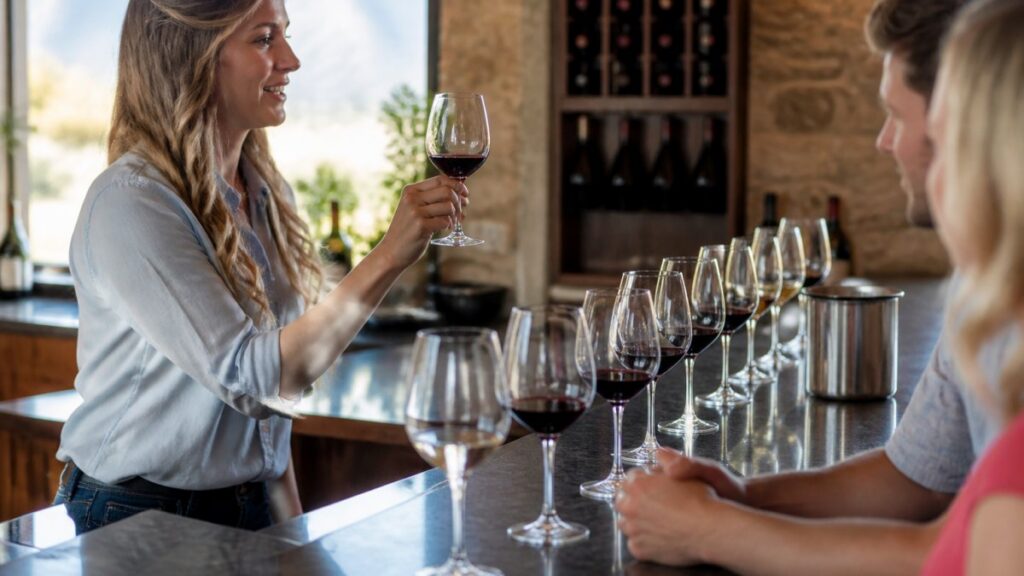
An authentic winery tasting is a guided experience where the person pouring your wine can explain how it was grown, made, and aged, and where the wine comes from fruit the winery controls. Estate-grown grapes mean the winery grows what it ferments, so the story behind the bottle is theirs to tell.
- Tasting rooms and wine clubs account for 53% of the average winery’s sales, per the First Citizens Bank 2026 report.
- Ask directly whether the winery grows its own grapes to judge authenticity.
- Taste with a four-step sequence: look, swirl, sip, and think.
- Ask which wine the host personally drinks at home for an honest answer.
- Hold the glass by the stem and use the dump bucket, which is not rude.
Table of Contents
- Why Authentic Winery Tastings Feel Different
- What to Expect at a Winery Tasting
- Estate-Grown Grapes and the Story Behind the Bottle
- How to Taste Wine for Beginners Without Feeling Lost
- Questions to Ask at a Wine Tasting
- Wine Tasting Etiquette That Keeps the Room Comfortable
- Reserve a Tasting at Maison La Belle Vie
- Frequently Asked Questions
Why Authentic Winery Tastings Feel Different
Tasting rooms and wine clubs account for 53% of the average winery’s sales, according to the First Citizens Bank 2026 State of the US Wine Industry Report. That number explains why so many tasting rooms exist. It also explains why so many feel alike.
An authentic winery tasting is a guided experience where the person pouring your wine can explain how it was grown, made, and aged, and where the wine itself comes from fruit the winery controls. That standard is rarer than the tasting-room boom suggests.
At Maison La Belle Vie Winery, we pour estate-grown wines on a 4.5-acre vineyard established in 2004.
Here is what to look for, and what to ask, so you can tell the real thing from a polished stop-and-sip.
What to Expect at a Winery Tasting
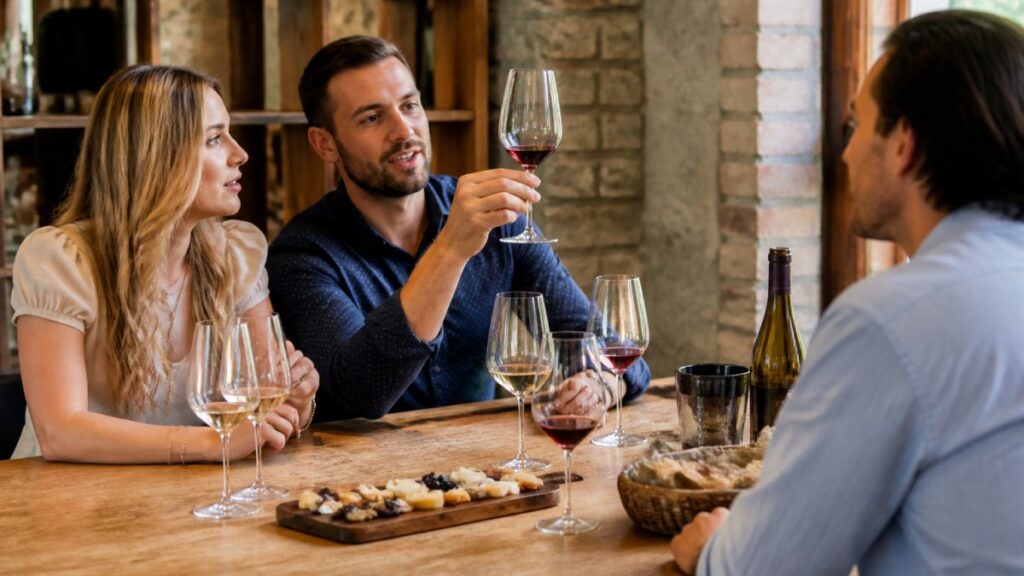
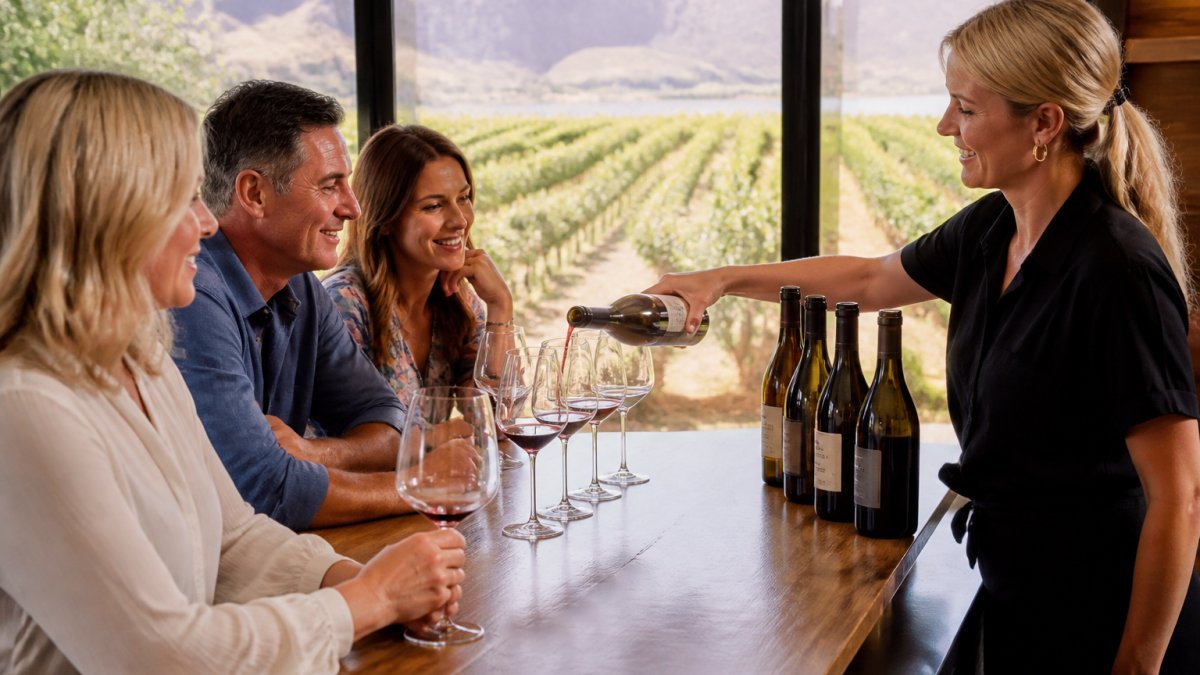
Expect a seated or standing tasting of several wines, a host who guides you through them, and a clear sense of place behind each pour. The best visits run longer than you think and teach you more than you expect.
The Room, the Glass, and the Pour
Look at the details. A real tasting room smells like wine and wood, not like a gift shop. The glass is clean and stemmed.
The host should pour in front of you and tell you what you are about to taste. If the pour happens out of sight and the host cannot name the vintage, that is a signal.
How Long a Real Tasting Takes
A genuine tasting is an unhurried conversation about the wine, and the host’s willingness to linger on how it was grown and made is a useful signal.
For a fuller picture of a guided visit, see what an educational winery tour involves.
Estate-Grown Grapes and the Story Behind the Bottle
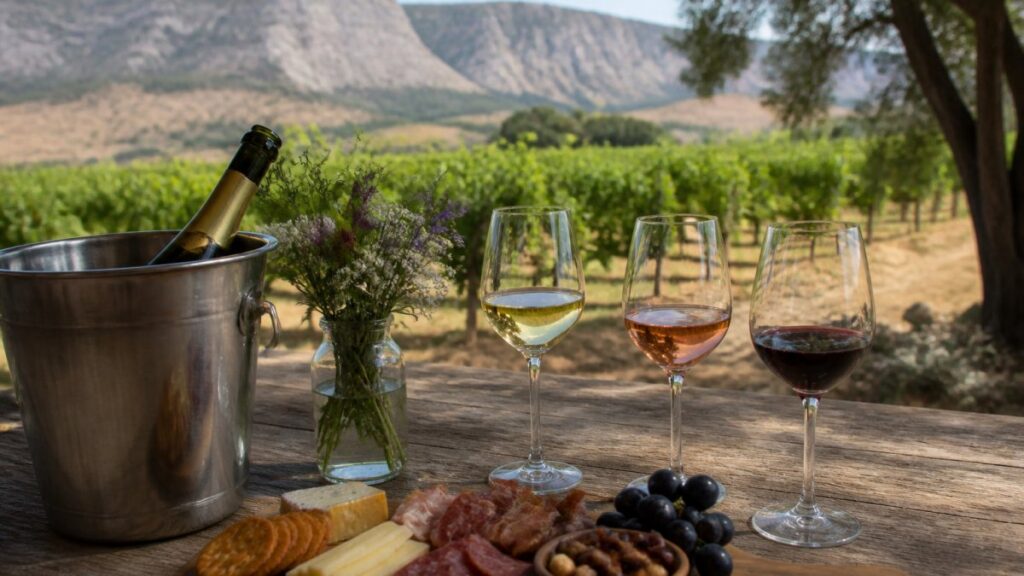
Estate-grown means the winery grows the grapes it ferments. That single fact changes everything about authenticity. The winery controls the fruit, so the story behind the bottle is theirs to tell.
Ask directly: do you grow your own grapes? A winery that sources fruit can still make good wine, but it cannot give you a first-hand account of the growing season.
The industry numbers show why this matters. Tasters increased 2.8% year over year, while wine sales declined 1.5% and average order value fell 1.2%, according to the DTC Wine Industry Snapshot and Report. People are showing up to taste. They are simply buying less. An authentic experience is what turns a taster into a customer.
For a deeper look at why estate fruit tastes different, read why estate-grown wine tastes better, or compare estate-grown versus sourced grapes.
How to Taste Wine for Beginners Without Feeling Lost
You do not need a vocabulary to taste wine well. You need a sequence. Use the same four steps every time and the words will come.
- Look: tilt the glass against a white background. Note the color and clarity.
- Swirl: this releases the aromas. Sniff before you sip.
- Sip: take a small amount and let it reach every part of your tongue.
- Think: name one thing you taste. Fruit, oak, or acid is enough to start.
Researchers publishing in Sociologica on expert wine tasting as a social practice describe expert tasting as requiring at least a base of technical knowledge about winemaking, including fermentation and maceration. You do not need that knowledge to enjoy a glass. You do need it to judge authenticity, which is why a good host explains the process.
A simple four-step sequence is all you need to taste wine with confidence.
| Step | What to do |
|---|---|
| Look | Tilt the glass against a white background; note color and clarity |
| Swirl | Releases the aromas; sniff before you sip |
| Sip | Take a small amount and let it reach every part of your tongue |
| Think | Name one thing you taste; fruit, oak, or acid is enough |
Questions to Ask at a Wine Tasting
Ask about the fruit, the process, and the people. Three good questions will tell you more than an hour of sipping.
- Where do the grapes come from?
- How was this wine aged, and for how long?
- Who makes the wine, and how long have they been here?
- Which wine do you personally drink at home?
That last question is the one most hosts remember. It invites an honest answer, and honest answers are the whole point.
Wine Tasting Etiquette That Keeps the Room Comfortable
Etiquette at a tasting is simple: treat the room like a host’s home. Arrive on time, keep your voice low, and taste rather than drink. The dump bucket exists for a reason, and using it is not rude. It signals you are there to taste.
A few habits make the visit better for everyone:
- Hold the glass by the stem, not the bowl.
- Ask before taking photos of other guests.
- Tip your host if the tasting was complimentary.
- Book ahead for groups, and confirm the size.
- Save perfume for another day. Strong scent masks the wine.
If you are planning a visit with a partner, our guide to wine tasting for couples covers how to pace the afternoon and make it feel like an occasion.
Reserve a Tasting at Maison La Belle Vie
Authenticity is hard to judge from the outside. You have to ask, taste, and listen.
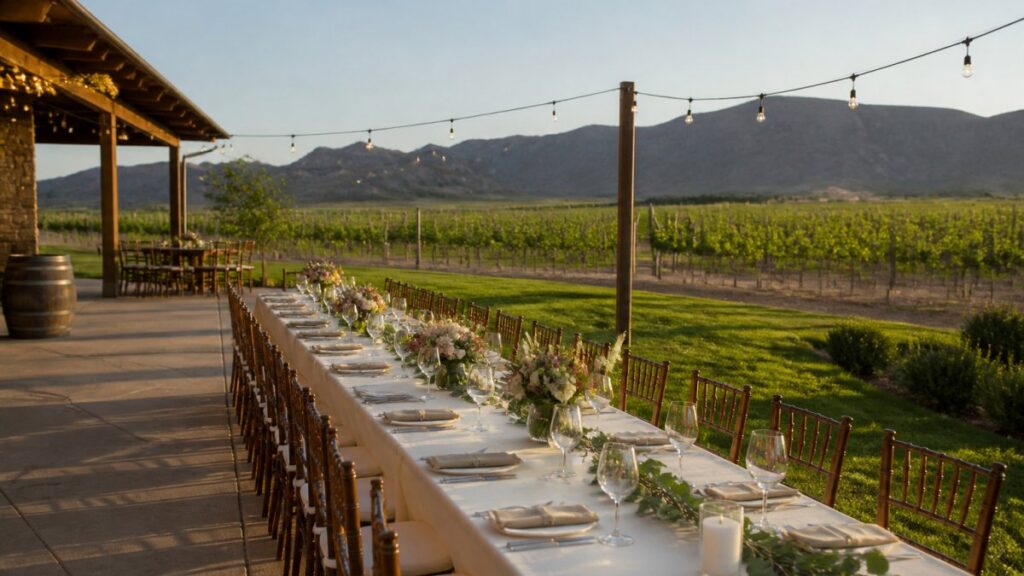
Maison La Belle Vie Winery grows estate fruit on a 4.5-acre vineyard, offers curated tasting experiences, and has elegant event spaces. Members of our Wine Society get access to exclusive releases. Couples and groups celebrating something worth marking can book the venue and outdoor space.
Reserve a tasting with Maison La Belle Vie Winery and taste the difference estate fruit makes.
Frequently Asked Questions
What makes a winery tasting authentic?
An authentic winery tasting connects the wine to the place it came from. You should hear which vineyard the grapes grew in, how the wine was made, and why the winemaker chose that approach. Estate-grown fruit, a host who can answer specific questions, and a pace that lets you actually taste rather than rush through pours all point to a genuine experience.
Do authentic winery tastings include wines made from estate-grown grapes?
Many do, but estate-grown is a claim worth verifying. Ask directly whether the grapes are grown on the property or sourced elsewhere, and whether the wine is made on site. A winery that grows its own fruit can tell you about the specific block, the harvest, and the vintage conditions. If the answer stays vague, the tasting may still be enjoyable, but it is not the same as tasting a wine tied to the land you are standing on.
How long does a winery tasting usually take?
A seated tasting typically runs 45 to 90 minutes, depending on how many wines are poured and how much conversation happens. A quick stand-and-sip stop can wrap in 20 minutes. If you want to learn something about winemaking, book a seated or guided tasting and plan for at least an hour. Industry median winery visitation grew 7% in the most recent 2026 Tasting Room Survey Report, the first increase in two years, so reserving ahead is wise on weekends.
How can you tell if a wine tasting is educational?
Look for a host who explains the winemaking, not just the tasting notes. You should hear about fermentation, maceration, aging, and why this vintage differs from the last. Ask a follow-up question and see whether the answer is specific or rehearsed. A useful benchmark: if the conversation never touches how the wine was made, the session is entertainment more than education.