Last Updated: November 3, 2026
Quick Summary
Educational wine tasting experiences in Colorado are structured sessions that explain why each wine tastes the way it does, rather than just pouring samples. Maison La Belle Vie Winery in Palisade builds its wine tastings around estate-grown wines, so guests can connect what is in the glass to the vineyard it came from.
- An educational tasting is a sequence where each wine is presented with context on variety, growing conditions and palate cues.
- Tours, classes, workshops and private tastings differ in structure, and beginners do best with a tour or themed workshop.
- Compare inclusions such as number of pours, food and take-home materials, and ask for the all-in price per person.
- Taste a white and a red from the same region side by side to see how the same growing conditions express differently.
- Use a designated driver or a rideshare and pace your pours during any tasting.
Table of Contents
- How an educational tasting differs from a standard pour
- Wine Tasting for Beginners: What to Expect Before You Go
- Guided Wine Tasting Formats Compared
- Colorado Wine Regions, Varieties and the Best Colorado Wines to Taste
- Wine and Food Pairing as a Learning Tool
- Planning Your Visit: Seasons, Transportation and Responsible Tasting
- Booking Your Educational Tasting at Maison La Belle Vie Winery
- Frequently Asked Questions
Educational wine tasting experiences in Colorado are best described as structured sessions where you learn why each wine tastes the way it does, not just sip what is poured. Maison La Belle Vie Winery, in Palisade, builds its tastings around estate-grown wines, so guests can connect what is in the glass to the vineyard it came from.
How an educational tasting differs from a standard pour
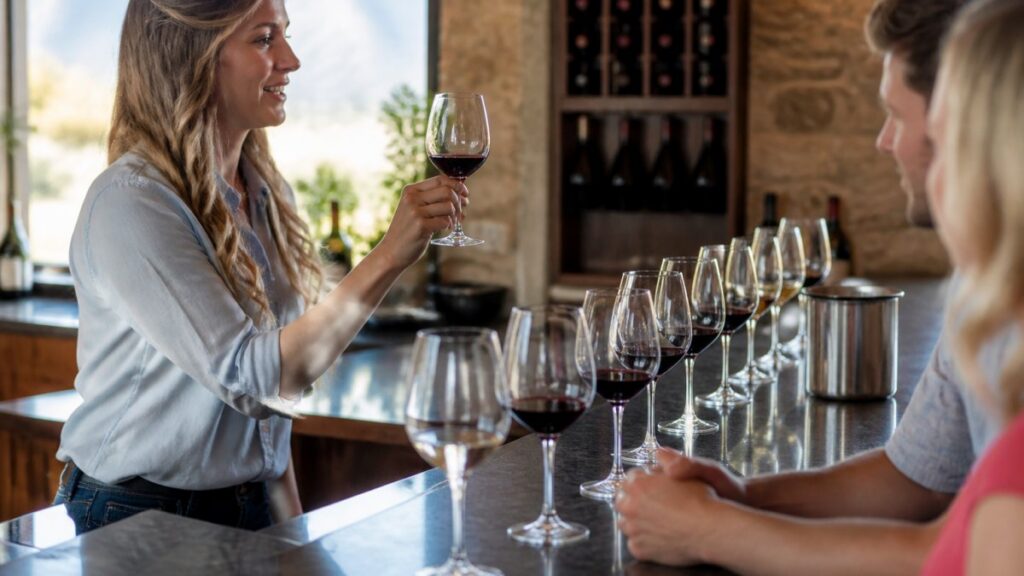
A standard pour is a sample: you taste, you choose, you move on. Learn how to tell an authentic, substantive tasting from a superficial one. An educational tasting is a sequence: each wine is presented with context on its variety, its growing conditions and what to notice on the palate.
Watch out: a tasting that is only a list of tasting notes can sound educational while teaching you very little. Ask what the host would change about the wine if you asked for a different style.
Wine Tasting for Beginners: What to Expect Before You Go
If you have never done a guided tasting, expect a relaxed, unhurried session rather than a test. You do not need prior knowledge to take part.
Arrive a few minutes early, eat something light beforehand, and plan on a designated driver or a ride service. Expect to be asked what you smell and taste, and to have that answer taken seriously. The goal is to notice differences, and the vocabulary follows from that.
Guided Wine Tasting Formats Compared
Guided wine tasting in Colorado comes in several formats, and the right one depends on how much time you have, how deep you want to go, and whether you want a certificate at the end. The main options are tours, classes, workshops, and private tastings.
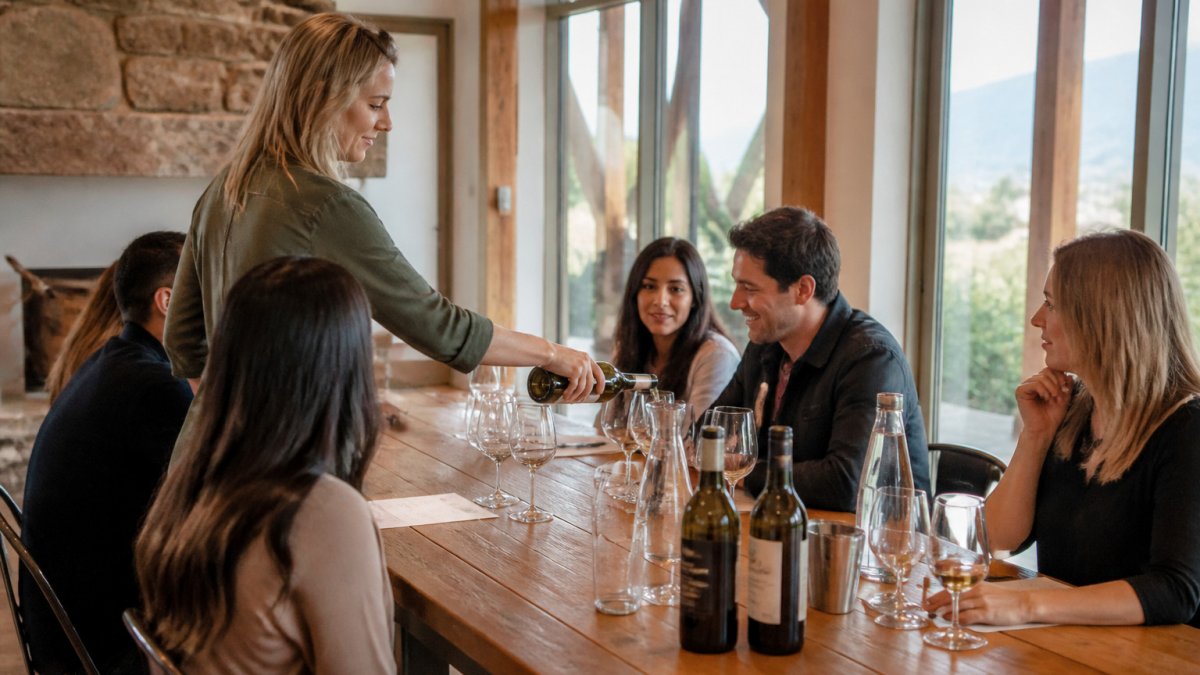
Tours, classes and workshops: how they differ
A tour moves you through a property, vineyard rows, crush pad, barrel room, usually with a tasting at the end. The learning outcome is process literacy: you leave understanding how grapes become wine at that site. A class is structured around a curriculum and often ends with a certificate or a stated set of learning objectives. A workshop sits between the two, focusing on a single theme such as a region, a variety, or a style, and usually runs shorter than a full class.
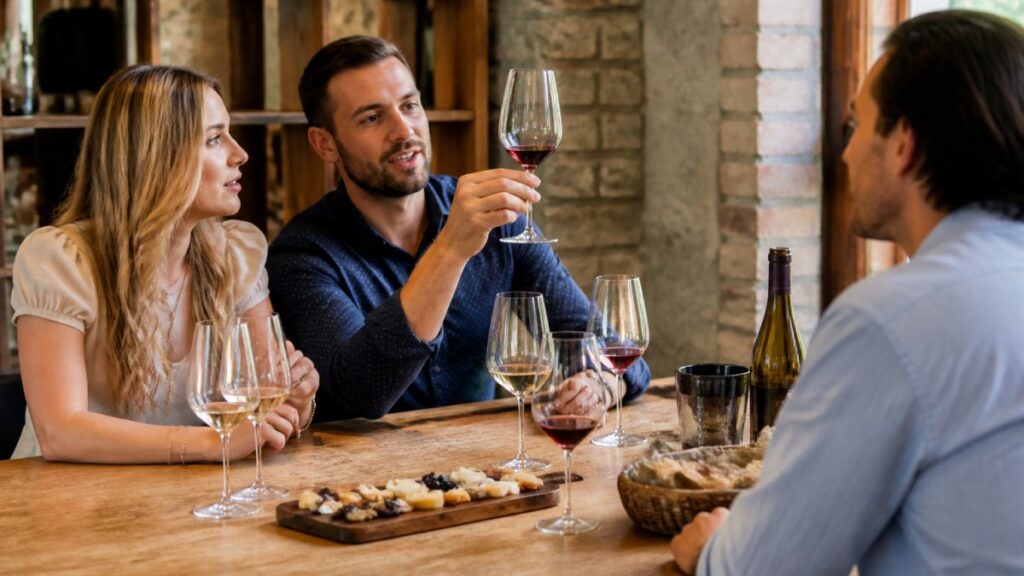
A private tasting is the most flexible format. It is hosted for your group alone, so the host can adjust the flight and the depth of explanation to the room. That flexibility is why private tastings work well for mixed-experience groups, where one guest wants the basics and another wants to talk about fermentation.
Typical duration, group size and cost
Use these ranges as a planning baseline, then confirm the current figures on each provider’s listing, since sessions change by season and by host.
- Winery tour with tasting: tour and tasting lengths, group sizes and pricing vary by property and season, so confirm the current details with the winery directly.
- Structured class or one-day course: length, group size and pricing depend on the course, including whether food and materials are included.
- Themed workshop: length, group size and pricing vary by host and theme.
- Private tasting: pricing and any minimum spend depend on group size, date and season. Ask for the group rate, minimum and cancellation terms when you inquire.
Pricing is set by each winery or school, so compare the inclusions, number of pours, food, education content, take-home materials, rather than the headline figure alone.
Watch out: a headline price sometimes excludes gratuity, a facility fee, or the cost of the flight itself, so ask for the all-in total per person before you reserve (the FTC).
Matching the format to your skill level
Beginners do best with a tour-and-tasting or a themed workshop, where the host supplies vocabulary and the pace is unhurried. Intermediate tasters, people who already know they prefer certain varieties, get more from a structured class that compares regions or winemaking styles side by side. Advanced tasters and anyone considering certification should look for a multi-session course or a sommelier-led event, where the learning outcomes are stated in advance and the assessment is part of the format.
A practical rule: if the listing does not state what you will be able to do afterward, ask the host directly. A format that cannot name its learning outcome is usually a standard pour with a longer runtime.
The main formats differ in length, group size and what you walk away knowing, so compare them side by side before booking.
| Format | Best for | Key difference |
|---|---|---|
| Tour with tasting | Beginners | Shows how grapes become wine at the site |
| Structured class | Intermediate tasters | Compares regions or styles on a curriculum |
| Themed workshop | Focused learners | Centres on one region, variety or style |
| Private tasting | Mixed-experience groups | Host adjusts pace and depth to the room |
Colorado Wine Regions, Varieties and the Best Colorado Wines to Taste
Colorado wine education works best when you taste across regions and varieties rather than one bottle at a time. The Grand Valley around Palisade is one of Colorado’s wine-growing areas, and the varieties grown there can taste different from those grown at other Colorado sites. That difference is the most useful thing a tasting can teach you.
High-elevation growing conditions and what they mean in the glass
Colorado’s climate, with its strong sun and cool nights, is one of the factors that shape the character of the wines produced there. Read about estate-grown wine versus sourced grapes to see how sourcing shapes flavor.
Colorado varieties and how to taste them side by side
Our estate produces Muscat and Marechal Foch.
The best Colorado wines to taste depend on your palate, so ask the host to pair a white and a red from the same region side by side. That single comparison teaches more than a list of descriptors: you can taste how the same sun, soil, and season express themselves differently in two wines. Then ask for the same variety from two elevations or two vintages, and note what changed in acidity, fruit, and structure. That is the exercise that turns a tasting into an education.
Watch out: a flight that jumps between unrelated styles without a stated through-line can feel educational while teaching you very little, so ask the host what the sequence is designed to show.
Wine and Food Pairing as a Learning Tool
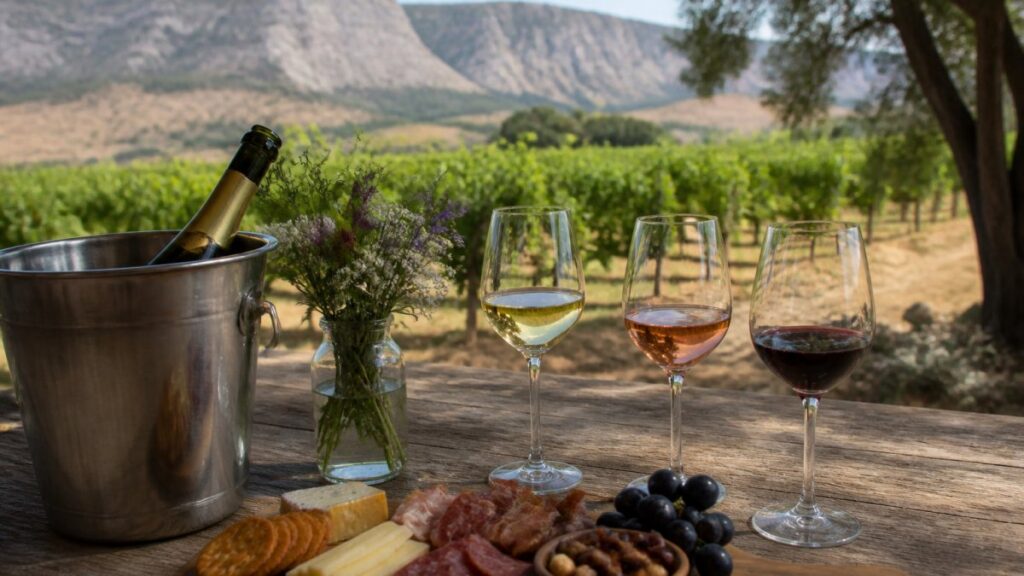
Food pairing is not only about enjoyment. It shows how acidity, sweetness and tannin change when you put a wine next to a dish. Find Palisade wineries where you can combine a tasting with a meal. Tasting a dry wine alone, then with a rich bite of food, makes these interactions obvious.
Use pairing as a deliberate exercise: taste one wine on its own, then with a bite of cheese or fruit, and note what changed. That single comparison teaches more about structure than a long list of descriptors.
Planning Your Visit: Seasons, Transportation and Responsible Tasting
Use a designated driver or a rideshare, and pace your pours.
Booking Your Educational Tasting at Maison La Belle Vie Winery
For a guided session, you can book a tasting or class directly through our site. If you want to compare what the experience involves before you commit, read what an educational winery tour involves to see how a session is structured from start to finish.
For a private group or anniversary, see our private tasting packages and contact us for a current quote. Reserve a tasting today and see the difference a guided, educational session makes.
Frequently Asked Questions
What can you learn at an educational wine tasting?
An educational wine tasting teaches you how to evaluate wine rather than only how to drink it. Guides typically walk you through sight, smell and taste, explain how grape variety, climate and winemaking affect a glass, and help you put words to what you notice. In Colorado, many sessions also cover how high-elevation vineyards shape acidity and aroma. Beginners leave with a vocabulary and a method they can reuse at any tasting room, restaurant or shop.
How long does a guided wine tasting usually take?
Most guided wine tastings run between one and two hours, depending on the number of pours and whether food is included. Short tastings focused on a few wines suit a stop during a day of sightseeing. Longer classes or workshops may last two to three hours and include more structured instruction. Check the duration on the booking page before you plan the rest of your day, since a longer session may affect transportation and meal timing.
What is the difference between a wine tasting and a wine class?
A standard wine tasting is a sampling experience, usually with a set flight of wines and a host who pours and describes them. A wine class is a structured lesson with a defined learning goal, often with materials, a set number of wines and time for questions. Classes tend to suit people who want to build skills, while tastings suit people who want to sample and enjoy. Many Colorado wineries offer both, so compare the descriptions before booking.
Which Colorado wines are best for learning about local varietals?
Maison La Belle Vie grows its own fruit on a 4.5-acre vineyard in Palisade, and its estate wines include Muscat and Marechal Foch. Tasting these side by side gives a useful contrast between an aromatic white and a red hybrid grape. Ask your host which varietals the winery grows on site and which are sourced elsewhere, so you know what you are tasting. Starting with two or three wines makes comparison easier for beginners.
What questions should you ask during a winery tasting?
Useful questions include: Which grapes are estate-grown here? What elevation are the vineyards at? How does the winemaker handle oak? What food would you pair with this wine? Asking about production gives you context for flavor and helps you learn what to look for in future tastings. Hosts at educational experiences generally welcome these questions, and the answers often explain why one wine tastes brighter or more structured than another.
Can you learn about wine production during a winery visit?
Yes, many winery visits include a look at how wine is made, from harvest and crushing to fermentation, aging and bottling. The depth varies: some tours are brief walkthroughs of the production area, while others include barrel tastings or conversations with the winemaker. If production is your main interest, ask before you book whether the experience includes a tour of the winemaking space and how long it lasts.
What should beginners know before a wine tasting?
Beginners do not need prior knowledge to enjoy a tasting. Arrive hungry or eat something beforehand, plan a designated driver or ride-share, and pace your pours with water. Expect to taste wines in a set order, usually from lighter to heavier. Don’t worry about using perfect terminology. Describing what you notice, such as fruit, acidity or sweetness, is enough to make the experience useful.
How do you taste wine like a sommelier?
Professional tasters follow a repeatable sequence: look at the color and clarity, swirl to release aromas, smell for fruit, floral, herbal or earthy notes, then sip and assess sweetness, acidity, tannin, body and finish. Most guided tastings teach a version of this method. Practicing at home with two wines of different styles will build the habit more quickly than memorizing tasting notes.