Table of Contents
- Why Seek a Restoration Vineyards Alternative for Wine Tours
- Maison La Belle Vie: Estate Wines and On-Site Dining
- What to Expect in a Palisade Wine Tasting Experience
- Palisade Winery Tours: Logistics, Transportation, and Group Options
- Palisade Wineries with Food: Dining and Pairing Experiences
- Planning Your Palisade Wine Tour Itinerary
- Choosing the Right Winery for Your Needs
- Conclusion
- Frequently Asked Questions
Last Updated: October 21, 2026
Why Seek a Restoration Vineyards Alternative for Wine Tours
If you’ve explored the wine country around Palisade, you know the options can feel repetitive. Many visitors arrive expecting a genuine connection to the vineyard, meaningful hospitality, or dining beyond standard tastings. A Restoration Vineyards alternative for wine tours isn’t just about switching venues; it’s about finding a winery that delivers on what makes wine country worth visiting.
Travelers now expect curated experiences, food that complements the wines, and staff who understand what they’re seeking. At Maison La Belle Vie Winery, we’ve built our reputation on exactly this: estate-grown wines, genuine hospitality, and on-site dining that transforms a visit into an event.
This guide covers what to look for in your next winery experience, how logistics shape your day, and why the right venue can make the difference between a pleasant afternoon and one you remember.
Maison La Belle Vie: Estate Wines and On-Site Dining
Our winery integrates what most Palisade properties treat as separate offerings: grapes grown on 4.5 acres established in 2004, a full on-site restaurant, event spaces, and vineyard accommodations. This isn’t scattered, it’s deliberate design.
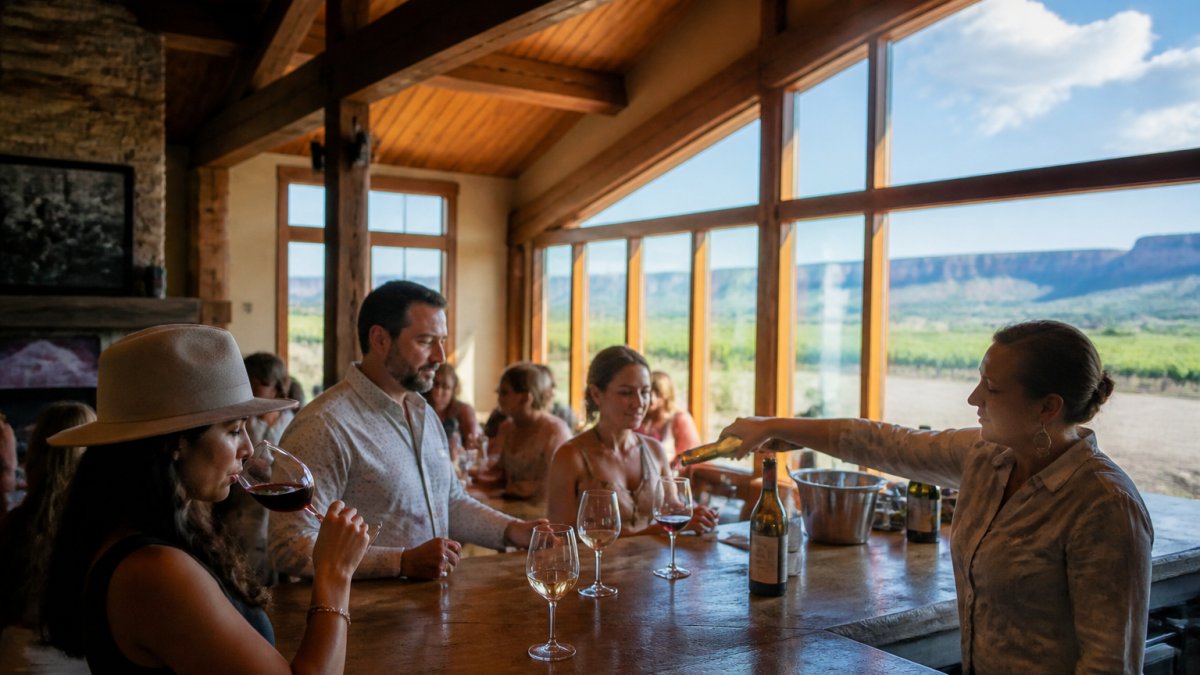
Our estate-grown portfolio includes Muscat and Marechal Foch varietals, alongside wines that reflect what this terroir actually produces. We don’t chase trends or import bulk wine, what you taste is rooted in this specific vineyard.
On-site dining changes how people experience wine. Rather than tasting in isolation, you explore each pour alongside food chosen to complement it, and each wine reveals different dimensions when matched thoughtfully.
Our Wine Society membership grants access to exclusive releases and members-only events throughout the year, creating continuity for returning visitors. Many couples who’ve celebrated anniversaries here join for this ongoing connection.
What to Expect in a Palisade Wine Tasting Experience
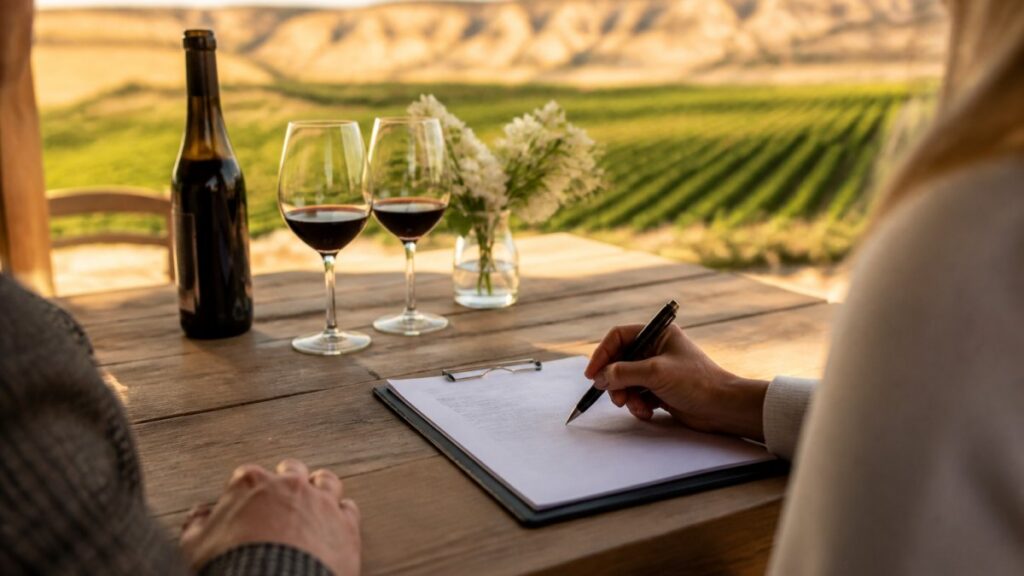
A genuine Palisade wine tasting experience centers on the winery’s actual production and philosophy. You’ll typically spend 60 to 90 minutes moving through 4 to 6 wines, and quality depends almost entirely on who’s pouring and what they know about their own product.
Look for staff who can articulate why this wine spent time in oak, why that one didn’t, and what the growing season meant for this vintage. Generic tasting-note commentary signals a property treating tastings as volume transactions rather than genuine education.
The physical setting matters more than many realize. Vineyard views, natural light, and comfortable seating transform the experience from functional to memorable, so the environment should feel intentional.
Reservation policies vary: some properties welcome walk-ins, others require advance booking, especially on weekends. For groups larger than four, always confirm capacity and timing preferences.
Palisade Winery Tours: Logistics, Transportation, and Group Options
How you move through wine country shapes what you experience, and logistics deserve more planning than most visitors give them. Tasting rooms are spread across a compact but not walkable corridor, so transportation determines how many properties you can visit, how safely, and at what cost.
The four realistic transportation models.
- Self-driving with a designated driver. Maximum flexibility and the lowest out-of-pocket cost, but the designated driver misses the tasting experience, and parking at smaller tasting rooms can be tight on peak weekends. Plan two to three stops maximum and build in 15-20 minutes of drive time between properties.
- Scheduled trolley or shuttle service. Fixed routes and departure times, usually with hop-on/hop-off stops at participating wineries. Convenient for couples and small groups who don’t want to plan a route, but the schedule dictates your pacing and you may wait for a pickup at the end of the day.
- Private car or driver-for-hire. The most flexible option for groups of four or more. You set the route and timing; the operator handles parking and driving. Book at least two to three weeks ahead on fall weekends, when demand for private drivers peaks.
- Guided group wine tours. Operators bundle transportation with scheduled tastings at a set list of properties. Best for visitors who want zero planning, but the itinerary is fixed and you may not get to choose every stop.
Booking mechanics that actually matter.
Most professional operators require a deposit at booking and a final headcount 48-72 hours before the tour, and cancellation windows vary widely.
Route planning.
Cluster stops by geography rather than reputation. A common pattern is to start at the property furthest from your lodging and work back toward town, so the final stop is closest to dinner or your hotel. Build in a 30-45 minute lunch stop as palate recovery.
Group size changes everything.
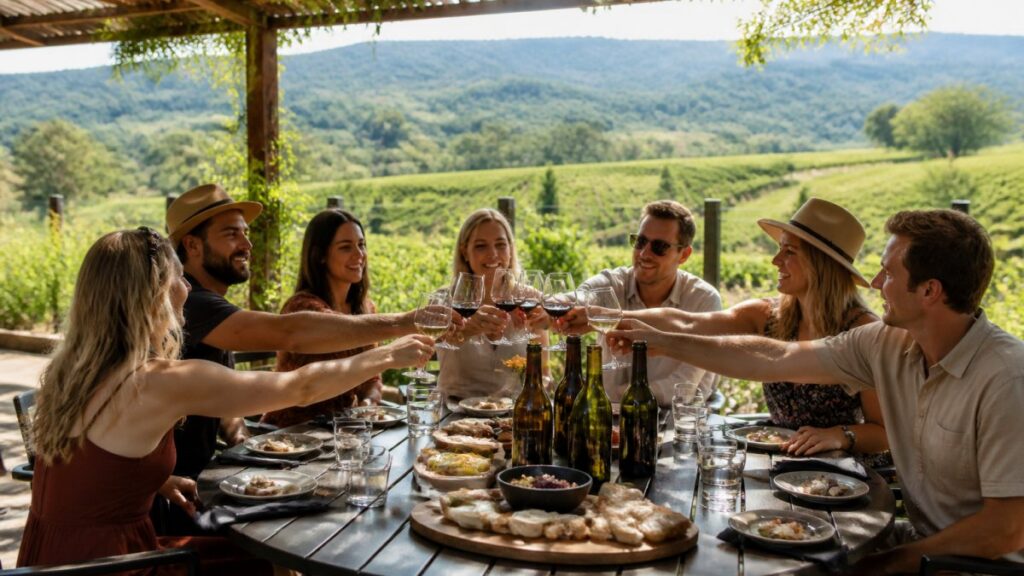
Parties of two to four can usually book standard tasting slots with a week or two of notice. Parties of eight or more need advance coordination, since many tasting rooms cap standard reservations at six to eight guests and require a separate group booking, set menu, or private space.
Safety and pacing.
If you’re self-driving, the designated driver should abstain entirely, since four or five stops of one-ounce pours add up. Whichever model you choose, eat before you start, drink water between tastings, and don’t schedule a fourth stop if the first three already felt rushed.
Ask the operator whether they can adjust the route mid-tour if a property is crowded or a group wants to linger. The best private drivers build in that flexibility; fixed-route shuttles usually can’t.
Palisade Wineries with Food: Dining and Pairing Experiences
Not all wineries offer food beyond cheese boards or charcuterie, and the difference between a snack plate and a full kitchen shapes whether your visit is a tasting or an afternoon.
The four food formats you’ll encounter.
- Tasting-only. No food beyond crackers or water. Fine for a focused tasting, but plan a meal before or after.
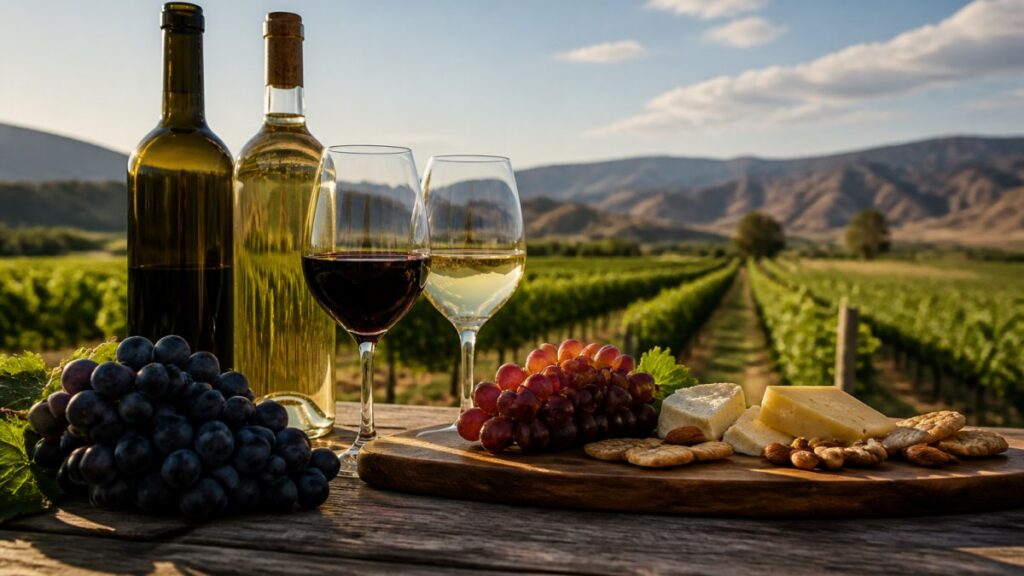
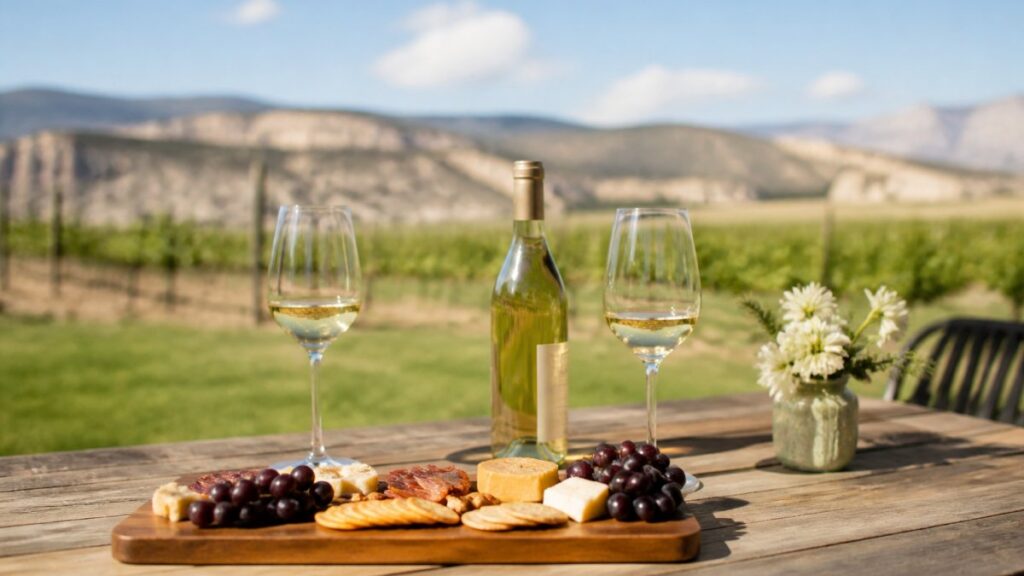
- Snack and picnic boards. Cheese, charcuterie, nuts, and bread, usually priced per board. Casual and flexible, but not a meal.
- Pairing flights. A set of small bites matched to specific wines, served as a structured progression. Usually requires advance booking and a fixed start time.
- Full on-site dining. A restaurant kitchen with a seated menu, where wine and food are designed together. This is the format we operate, and it’s the one that changes the shape of a visit most.
What pairing actually does.
A pairing works when both elements are intentional.
Dietary accommodations.
Vegetarian, vegan, gluten-free, and allergen-conscious requests are common, but the ability to meet them varies.
Reservations, pricing, and timing.
Food service usually requires a reservation even when the tasting room accepts walk-ins.
Outdoor seating and picnic policies.
Outdoor seating is a major draw in season, but policies differ: some properties allow you to bring your own food and picnic on the grounds, others prohibit outside food.
Dogs and accessibility.
Pet policies deserve a direct question: many wineries welcome dogs on outdoor patios only, and fewer allow them inside. Confirm the actual practice rather than relying on a general “pet-friendly” label.
Seasonality and hours.
Food service hours are often narrower than tasting-room hours, and some kitchens run only on weekends or by reservation in the shoulder season.
If food is central to your visit, book the meal first and build the rest of the day around it. Seated dining and pairing flights have the least flexible schedules of anything on a wine tour.
Planning Your Palisade Wine Tour Itinerary
A thoughtful itinerary balances discovery with pacing. Visiting more than three wineries in a day typically results in wine fatigue: your palate becomes less discerning and the experiences blur together. Two or three properties allow time to genuinely engage with each one.
Start at the property where you want to spend the most time. Morning visits, when your palate is fresh, suit complex or unfamiliar wines better than afternoon tastings; save lighter, more approachable wines for later when sensory fatigue increases.
Cluster visits by location to reduce driving time and preserve energy for wine exploration. Build time between tastings, whether lunch, a walk, or simply sitting with views, to refresh your palate and extend how much you can meaningfully taste.
If you’re celebrating an anniversary, birthday, or milestone, say so when booking. Properties that understand the occasion can adjust pacing, suggest special wines, or add touches that transform a standard visit into something memorable.
| Element | Consideration | Impact |
|---|---|---|
| Timing | Weekday vs. weekend | Crowd levels, personalization, availability |
| Group size | 2-4 vs. 8+ people | Venue options, pacing, intimacy |
| Duration | 2-3 hours vs. full day | How many properties, depth of experience |
| Food | Tasting only vs. dining | Satisfaction, pacing, cost structure |
| Transportation | Self-drive vs. professional | Flexibility, safety, logistics burden |
Choosing the Right Winery for Your Needs
Different visitors prioritize different elements. A couple celebrating an anniversary weighs atmosphere, dining quality, and staff attentiveness differently than a group of friends seeking education and variety. Identifying what matters to you prevents wasted time at misaligned properties.
Ask yourself what you’re really after. Are you seeking wine education or a beautiful setting for a special day? Do you want to taste many wines quickly or spend deep time with a few?
Read recent visitor reviews critically. Generic praise (“Great place!”) tells you less than specific observations (“Staff knew the wines inside out, but the tasting room felt cramped”). Look for patterns: if multiple reviews highlight the same strength or weakness, that’s substantive.
Consider logistics honestly. If you’re driving between venues, factor in driving time and the reality that your palate deteriorates as the day progresses.
Our approach centers on depth over breadth. We’re designed for visitors who want to understand the vineyard, experience thoughtful food pairings, and spend meaningful time in one location rather than rushing between properties.
Contact properties directly rather than relying solely on online reviews. Staff can answer specific questions about your group’s needs, dietary restrictions, or occasion, and their responsiveness signals how much they’ll prioritize your visit.
Conclusion
Choosing a Restoration Vineyards alternative for wine tours comes down to matching your priorities with what a property genuinely delivers. The wine country around Palisade offers variety, but not every venue is right for every visitor. At Maison La Belle Vie Winery, we’ve built our reputation on combining estate-grown wines with on-site dining, professional hospitality, and thoughtful event spaces. Reserve a tasting with us and experience the difference genuine integration makes, from the vineyard to your glass to your table.
Frequently Asked Questions
What are some alternatives to Restoration Vineyards for wine tours in Palisade?
Several Palisade wineries offer distinct wine tour alternatives. Maison La Belle Vie stands out as the only winery in Palisade with a full restaurant, estate-grown wines including Muscat and Marechal Foch, and on-site vineyard accommodations. Other local options include Book Cliff Vineyards, Colterris, and Carboy Winery, each offering unique vineyard settings, wine selections, and hospitality styles. Your choice depends on whether you prioritize dining experiences, specific wine varietals, scenic views, or group size accommodations.
Can you visit multiple wineries in Palisade in one day?
Yes, many visitors plan multi-winery Palisade wine tour itineraries in a single day. Most tastings take 45 minutes to 2 hours, allowing you to visit 2-3 wineries comfortably. Consider arranging transportation via a designated driver, rideshare, or local tour service to safely enjoy tastings at each location. Plan your route geographically to minimize travel time between venues, and check tasting room hours in advance, as some operate limited schedules on certain days.
Which Palisade wineries offer food with wine tastings?
Maison La Belle Vie is the only winery in Palisade with a full on-site restaurant, offering curated wine and food pairings alongside tasting experiences. Many other Palisade wineries with food options provide charcuterie boards, cheese plates, or picnic accommodations, though full dining services are limited. If food pairing is essential to your experience, Maison La Belle Vie’s restaurant setting provides a more complete culinary journey than traditional tasting-room snacks.
What should I look for in a winery tasting experience?
Evaluate wineries based on wine quality and selection, tasting room hospitality and staff knowledge, vineyard setting and scenery, food and pairing options, reservation policies and tasting fees, and suitability for your group size or special occasion. Consider whether you prefer estate-grown wines, specific varietals, or educational experiences. Check visitor reviews for honest feedback on service, value, and memorable moments. For special occasions like anniversaries, prioritize venues offering private spaces, elegant atmospheres, and personalized attention.
How should I plan transportation for a winery tour?
Arrange transportation before visiting multiple wineries to ensure safe, responsible tasting. Options include designating a non-drinking driver, using rideshare services, hiring a private car or limousine service, or booking an organized wine tour that includes guided transportation. Many Palisade wine country visitors use trolley tours or local shuttle services. Plan your route to visit geographically close wineries, confirm tasting room hours and reservation requirements, and allow 1-2 hours per venue including travel time between locations.