Table of Contents
- Understanding Private Winery Events and What to Expect
- Step 1: Define Your Event Vision and Guest Count
- Step 2: Research and Compare Winery Venues
- Step 3: Submit Your Private Wine Tasting Events Inquiry
- Understanding Winery Event Pricing and Budget Planning
- Step 4: Use a Private Event Inquiry Template and Checklist
- Step 5: Confirm Details and Finalize Your Winery Event Planning Checklist
- Common Mistakes to Avoid When Booking Private Winery Events
- Frequently Asked Questions
Last Updated: October 21, 2026
Understanding Private Winery Events and What to Expect
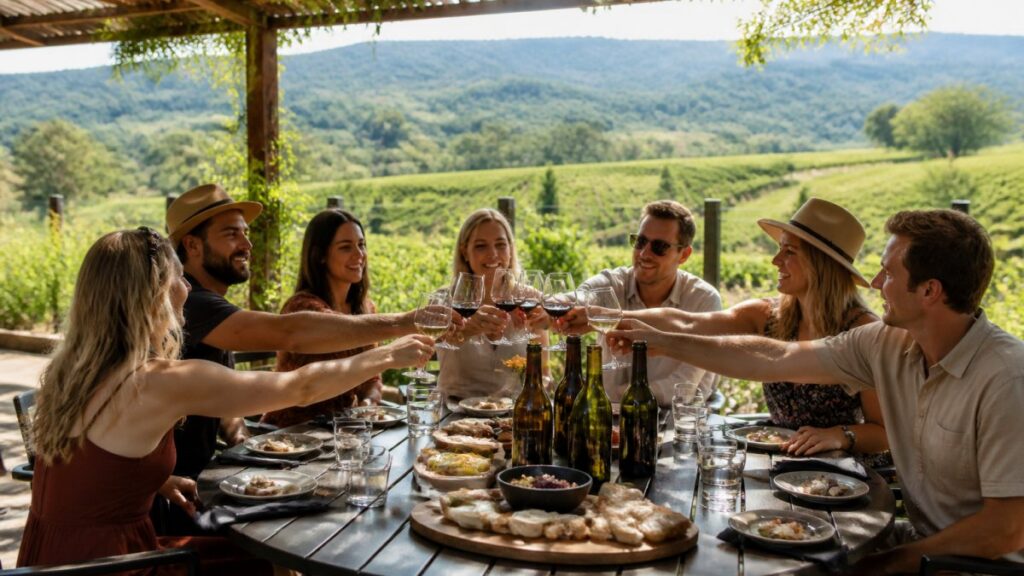
When you book private winery events, you secure an exclusive gathering where your group enjoys curated tastings, dining, and entertainment in a dedicated space, separate from the public tasting room.
What makes them special is the customization.
Private winery events typically include a dedicated event space, curated wine selections, food and wine pairing options, professional service, and flexibility to customize timing and activities.
Step 1: Define Your Event Vision and Guest Count
Start by getting clear on three things: what you’re celebrating, who’s attending, and what experience you want to create.
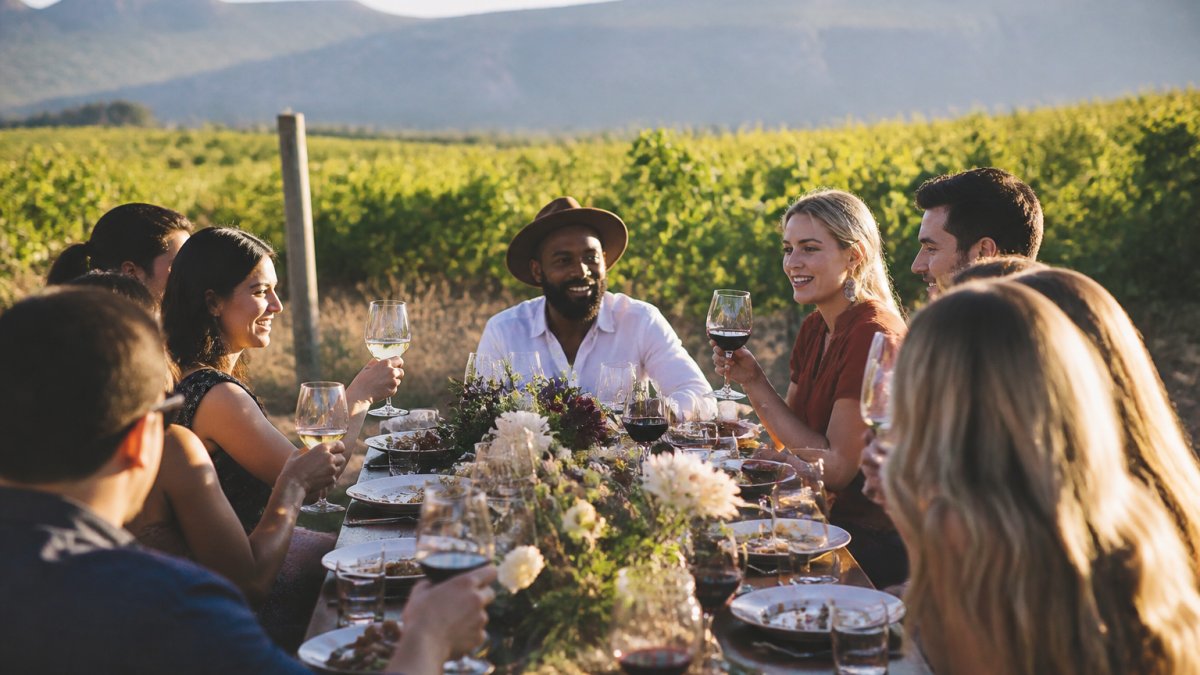
Your event’s purpose shapes everything that follows. An intimate anniversary dinner, a 75-guest wedding reception, a corporate team-building gathering, and a nonprofit fundraiser each require a different approach to venue selection, timing, and service style.
Next, count your guests carefully, this number determines which venues can accommodate you and influences pricing. Be realistic; it’s better to overestimate slightly than to scramble for space last-minute.
Document your answers:
- Event purpose (anniversary, wedding, corporate gathering, celebration)
- Expected guest count (final number, not estimate)
- Preferred date and time
Step 2: Research and Compare Winery Venues
Not all wineries offer private events, and not all private event spaces suit your needs. Identify wineries in your region that explicitly advertise private event hosting, group tastings, or private bookings. Read reviews from past event hosts, not just casual visitors, looking for comments about service quality, food options, and whether the space felt special.
When comparing venues, evaluate these criteria:
- Capacity: Can they handle your guest count comfortably?
- Event spaces: Indoor, outdoor, or both? Weather protection available?
- Wine selection: Do they produce wines you and your guests will enjoy?
Many wineries have different spaces for different group sizes, a venue perfect for 12 might feel cramped for 60. Ask specifically about capacity ranges and which spaces work best for your group size.
Step 3: Submit Your Private Wine Tasting Events Inquiry
Once you’ve narrowed your choices and are ready to book private winery events, reach out directly.
When you reach out, be specific. Instead of “I’m interested in booking an event,” say: “We’re planning an anniversary celebration for 20 people on June 15th.
Most wineries respond within 1-2 business days, ask clarifying questions, and may offer package options or custom arrangements, your chance to gauge how responsive and collaborative they are.
Many couples and event planners miss this: ask about the winery’s cancellation policy and what happens if weather forces an indoor-only event. Get these details in writing before you commit.
Understanding Winery Event Pricing and Budget Planning
Most winery event pages show a starting per-person price and stop there, but that number is rarely your final cost. A working budget has five or six line items, and knowing how each behaves separates a plan that holds up from one that blows past your number.
The line items that make up a winery event quote
Ask every venue to break its proposal into these components so you can compare apples to apples:
- Per-person experience fee. Covers the tasting itself, typically a set number of pours, a hosted pourer or educator, glassware, and use of the tasting space. Confirm whether the fee is tiered by wine selection.
- Food and beverage. Charcuterie, passed bites, seated dinner, or full catering. Charged per person, sometimes with a separate staffed-service charge. Ask whether non-drinkers and children are priced differently.
- Venue or space fee. Some wineries fold this into the per-person rate; others charge a flat room fee on top, especially for exclusive use of a barrel room, terrace, or lawn.
How to build a working budget
Start from the number you can actually spend, then work backward:
- Set your all-in ceiling. Decide the total you will spend, not the per-person number you hope to see.
- Reserve a contingency. Hold back 10%-15% for guest-count creep, added pours, extra time, or gratuity above the auto-added line.
- Request itemized quotes from at least three venues using the same guest count, date window, and experience level.
- Normalize each quote. Add the service charge, estimated tax, and gratuity so you compare final numbers, not headline rates.
- Stress-test the minimum. If your count is near a venue’s minimum, model what happens if ten guests drop out, does the minimum spend still apply?
Deposits, payment schedules, and cancellation math
Ask these questions before you sign anything:
- Deposit amount and timing. Typically a percentage of the estimated total, due to hold the date. Confirm whether it is refundable and under what conditions.
- Payment schedule. Many venues split the balance into a deposit, a mid-point payment, and a final payment due shortly before the event. Know each date.
- Final guest count deadline. Venues require a guaranteed count a set number of days out, and you are billed on that number even if fewer attend.
Ask each venue to send the quote as a line-item breakdown with tax and gratuity shown separately. A single all-in number hides the minimum spend and the service charge, which are the two lines most likely to move your final bill.
A simple budget worksheet
Use this structure for every quote you receive so the comparison stays honest:
| Line item | Venue A | Venue B | Venue C |
|---|---|---|---|
| Per-person experience fee × guests | |||
| Food and beverage subtotal | |||
| Venue/space fee | |||
| Staffing/service charge | |||
| Minimum-spend adjustment (if any) | |||
| Estimated sales tax | |||
| Gratuity | |||
| All-in estimate | |||
| Deposit due / date | |||
| Cancellation exposure |
Fill this in for each venue before you negotiate. The venue with the lowest per-person rate is often not the lowest all-in number once the minimum spend, service charge, and tax are added.
Where budgets usually break
The two most common overruns are guest-count creep after the guarantee deadline and day-of add-ons (extra pours, extended time, additional food). Both are avoidable: confirm the guarantee deadline in writing, and ask upfront about per-guest and per-hour charges for additions.
Step 4: Use a Private Event Inquiry Template and Checklist
A template keeps you organized when contacting multiple wineries and ensures you don’t forget important details.
Private Event Inquiry Template:
Event Details
Event name/occasion: [anniversary, wedding, corporate event, etc.]
Preferred date(s): [specific date or date range]
Guest count: [final number]
Approximate budget: [range, if applicable]
Guest Information
Wine experience level: [beginner, intermediate, enthusiast]
Dietary restrictions: [list any]
Accessibility needs: [describe any]
Event Vision
Desired atmosphere: [casual, romantic, upscale, educational, etc.]
Wine preferences: [red, white, mixed, no preference]
Food preferences: [light bites, full meal, specific cuisine]
Special requests: [outdoor preference, live music, wine education focus, etc.]
Contact Information
Name: [your name]
Email: [your email]
Phone: [your phone]
Preferred contact method: [email, phone, form]
Use this template when emailing or filling out inquiry forms so the winery has everything needed to respond accurately.
Step 5: Confirm Details and Finalize Your Winery Event Planning Checklist
Confirmation is where a private winery event is made or lost. The venue has your date and deposit; now you need a written record of what will happen, who is responsible for each piece, and what happens when something changes.
The booking timeline: when to do what
A practical sequence most planners follow:
- 8-12 months out (peak season and weekends): Inquire and hold a date. Popular venues and fall weekends book early, so start here if your date is fixed.
- 6-9 months out: Visit the venue, taste the wines, walk the spaces, and request a written proposal. Compare at least three venues using the budget worksheet in the pricing section.
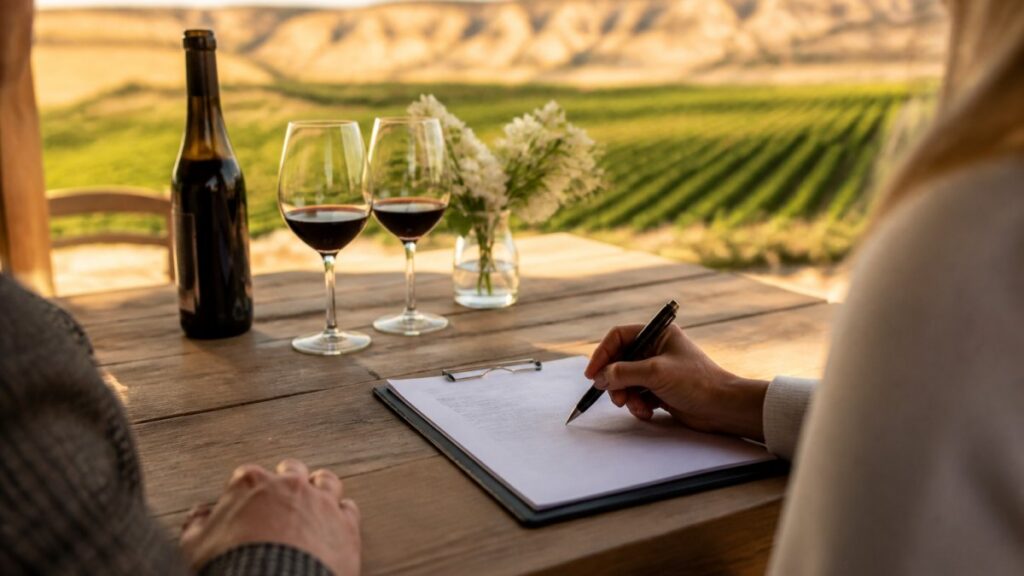
- 4-6 months out: Sign the contract, pay the deposit, and lock the space and experience tier. Confirm the guaranteed guest-count deadline and the final payment date.
What the contract should spell out
Request a written agreement and read it line by line. At minimum it should cover: date, times, and setup/breakdown access; guest count, guarantee deadline, and overage/attrition billing; wine selections, tasting format, and any education or tour; food menu, service style, and outside food or cake rules; space assignment and a backup if the primary is outdoor; total cost, deposit, payment schedule, taxes, service charge, and gratuity; cancellation, rescheduling, and force-majeure terms; insurance requirements and certificate deadlines; alcohol service rules including last call and whether staff must pour; setup and cleanup responsibilities; and parking, arrival instructions, and the day-of contact.
Outside vendors, rentals, and insurance
Many wineries allow outside vendors (florists, photographers, musicians, caterers) but attach conditions. Ask about the approved vendor list (or whether you can bring your own); certificate-of-insurance requirements, since many venues require vendors to carry liability insurance and name the winery as additional insured; delivery and setup windows, which are usually narrow, confirm in writing and pass to each vendor; and rentals, confirming who handles setup and removal of tables, chairs, linens, or a tent.
Alcohol service rules
Wineries operate under their own licensing, and those rules govern your event. Confirm whether all alcohol must be served by the winery’s staff; whether outside alcohol is allowed (usually not, and often prohibited by license); last-call and service-cutoff times; non-alcoholic options; and any age restrictions or ID-check policy.
Weather and logistics contingencies
For outdoor spaces, get the weather plan in writing: the decision deadline for moving indoors and who makes the call; whether a backup indoor space of comparable size exists and if it carries a fee; whether tents, heaters, or fans are permitted and who supplies them; and what happens to the timeline if setup is delayed. Also confirm parking capacity, rideshare drop-off points, and a step-free route from parking to the event space.
Final confirmation checklist
- Signed contract received, reviewed, and stored
- Deposit paid and receipt confirmed
- Guaranteed guest count deadline on the calendar
Do not assume the venue’s event team will chase you for missing details. The guaranteed count, dietary list, vendor insurance certificates, and final payment all have deadlines, and missing one can trigger a fee or limit your options. Put every deadline in your own calendar the day you sign.
Two weeks before the event, send a single confirmation email that restates the timeline, the guaranteed count, the day-of contact, and the weather plan. That one email is the cheapest insurance you can buy against event-day surprises.
Common Mistakes to Avoid When Booking Private Winery Events
Most problems stem from unclear communication or unrealistic expectations. Watch for these:
Underestimating guest count. People say they’ll attend, then don’t, or last-minute guests appear. Quote the winery with your realistic final number, not a rough estimate. Build in a small buffer, but don’t inflate it artificially, it affects pricing and can make your space feel empty.
Ignoring the fine print. Cancellation policies, minimum spends, and payment schedules matter.
Booking without tasting the wine first. Visit beforehand and taste the wines if possible.
Forgetting about logistics. Parking, restrooms, accessibility, and weather contingencies matter more than you think.
Not discussing customization. Some wineries offer only fixed packages; others customize extensively.
Waiting too long to book. Popular wineries book up months in advance, especially for peak seasons and weekends.
A common mistake: assuming the winery’s event team will handle all details without your input. They won’t. You need to communicate your vision clearly and confirm details multiple times. Vague requests lead to generic events.
Frequently Asked Questions
How far in advance should you book a private winery event?
Most wineries recommend booking private events 4-8 weeks in advance, though availability varies by season. Peak seasons (spring and fall) may require 2-3 months’ notice. Contact the winery as early as possible to secure your preferred date and ensure they can accommodate your group size and customization needs. Last-minute bookings are sometimes possible during slower periods, but don’t count on availability.
What should you include in a private event inquiry template?
A strong private event inquiry template should include your event type (wedding, corporate gathering, celebration), desired date and backup dates, estimated guest count, budget range, dietary restrictions, preferred wine experience level, and any special requests (outdoor space, private dining, specific wines). Include your contact information and availability for a follow-up conversation. The more detail you provide, the faster the winery can respond with accurate information and custom recommendations.
What types of private events can you host at a winery?
Wineries typically host weddings, anniversary celebrations, corporate retreats, nonprofit fundraisers, family reunions, milestone birthdays, and social gatherings. Many offer customized wine tasting experiences, private dining with food and wine pairings, and guided vineyard tours. The specific options depend on the venue’s capacity, indoor and outdoor spaces, and catering capabilities. Contact your chosen winery to discuss which event types and experiences they specialize in.
How much does it cost to book a private winery event?
Winery event pricing depends on guest count, date, time of year, duration, wine selections, food service, and customization level. Costs vary widely based on venue location and reputation. Rather than estimating, contact your winery directly for a detailed quote. Ask about package pricing, per-person minimums, venue fees, and whether food and beverages are included or separate. This ensures you understand the full cost before committing.